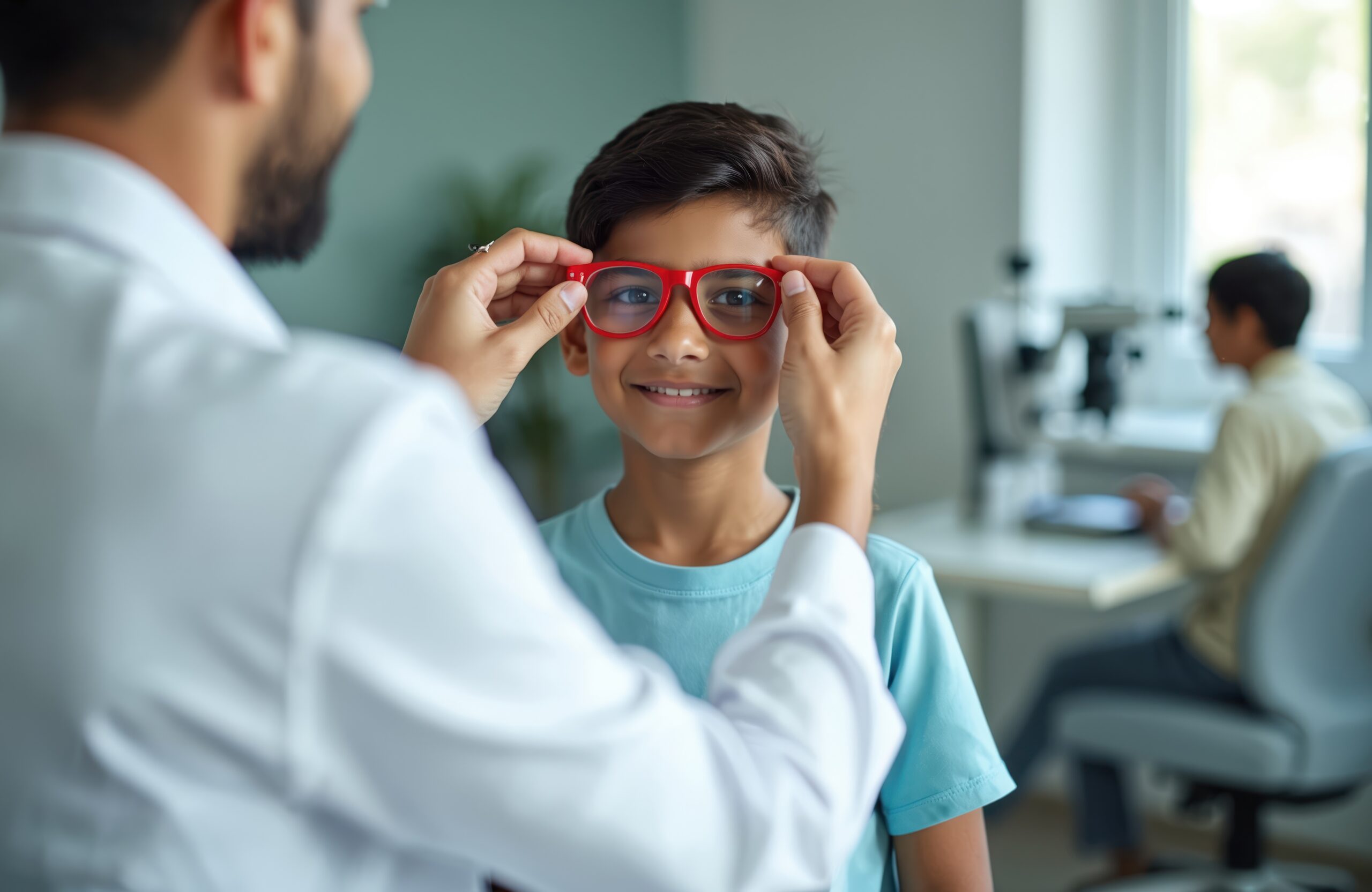
August is Children’s Eye Health & Safety Month, which makes it a reasonable time to cover what actually matters here — when eyes should be examined, why a school screening isn’t the same thing, and what’s worth watching for at home.
Read more →
August is Children’s Eye Health & Safety Month, which makes it a reasonable time to cover what actually matters here — when eyes should be examined, why a school screening isn’t the same thing, and what’s worth watching for at home.
Read more →
Your eyes feel tired and heavy after hours of screen time. You search “tired eyes” and find multiple terms: eye strain, eye fatigue, asthenopia, digital eye strain, and computer vision syndrome. What’s the difference? Here’s the truth that might surprise you.
Read more →
It’s 11 PM. Your eyes feel like sandpaper, your head aches, and sleep seems impossible. Those trendy blue light glasses promise relief—your coworker swears by them, and ads follow you everywhere. Before you spend $30 to $300, here’s what science actually says. Spoiler: Save your money.Blue light spans 400-500 nanometers (nm), with 415-455 nm being the highest energy visible light. Your screen emits less than 1% of what you get from the sun—about 100,000 times less blue light than stepping outside. During daytime, blue light is beneficial. It activates intrinsically photosensitive retinal ganglion cells (ipRGCs) in your retina, which suppress melatonin, boost alertness, and regulate your circadian rhythm. The problem: these ipRGCs can’t distinguish between your phone at 10 PM and actual dawn, potentially disrupting sleep signals. But here’s where marketing diverges from science.
Read more →
The pattern in all these holiday eye injuries is clear: most of them are entirely preventable. A moment of caution, the proper protective equipment, and awareness of risks can mean the difference between a joyful holiday season and one spent recovering from a serious injury. As you prepare for your holiday celebrations, keep eye safety in mind. An accident can happen in just seconds, but the consequences can last a lifetime.
Read more →
You’re out to dinner, the server hands you the menu, and suddenly you’re holding it at arm’s length trying to make out the small print. Or maybe you’ve noticed that reading text messages requires more effort than it used to, and you find yourself adjusting the distance between your phone and your eyes more often. If this sounds familiar, you’re likely experiencing presbyopia, a natural part of aging that affects nearly everyone. Welcome to presbyopia. It’s not a disease. It’s not “going blind.” It’s just your eyes reminding you that turning 40 comes with some assembly required—and apparently, those assemblies are reading glasses.
Read more →
You know that feeling when you realize you haven’t had a glass of water in hours? Maybe you’ve got a headache coming on, or you’re feeling a bit sluggish. But here’s something you might not have considered: your eyes are feeling it too.
At Looking Glass Optical in Pasadena, Maryland, Dr. Teles and Dr. Maner see patients every day who don’t realize that their eye discomfort is connected to something as simple as dehydration. Your body is about 60% water, and your eyes depend on proper hydration to function comfortably. When you don’t drink enough water, your vision can suffer in ways you might not expect.
Read more →
You’re driving home after dark, and suddenly the streetlights seem to have glowing rings around them. Or maybe you’ve noticed that oncoming headlights look like they’re surrounded by starbursts. If you’ve experienced halos around lights at night, you’re not alone—and you’re right to wonder what’s causing them.
At Looking Glass Optical in Pasadena, Maryland, Dr. Teles and Dr. Maner understand that changes in your night vision can be unsettling. The good news is that halos around lights aren’t always a sign of something serious. But they can be your eyes’ way of telling you that something needs attention. Let’s talk about what causes these halos, when they’re normal, and when it’s time to schedule an appointment.
Read more →
As the leaves begin to change color here in Maryland and we prepare for cooler weather, you might notice your eyes feeling different, too. While most people are aware that seasonal allergies can affect their vision, Dr. Teles and Dr. Maner want you to know that the changing seasons also impact your eyes in several other important ways that often go unnoticed.
Read more →
Have you ever wondered how your eyes work together to help you catch a baseball, park your car, or walk down stairs without stumbling? The answer lies in your remarkable depth perception, which enables you to see the world in three dimensions. At Looking Glass Optical in Pasadena, Maryland, Dr. Teles and Dr. Maner aim to help you understand this fascinating aspect of vision and why depth perception is important for your daily life.
Read more →
Video games are a common pastime for children and adults alike. They’re a fun way to de-stress and can even build helpful cognitive skills in young people before they enter the world. Unfortunately, gaming isn’t all positive. The gaming eye-health relationship has become clearer with recent research, and the signs point to frequent screen use causing vision problems. Here are the facts to consider as a parent or player before picking up the controller or mouse.
Read more →