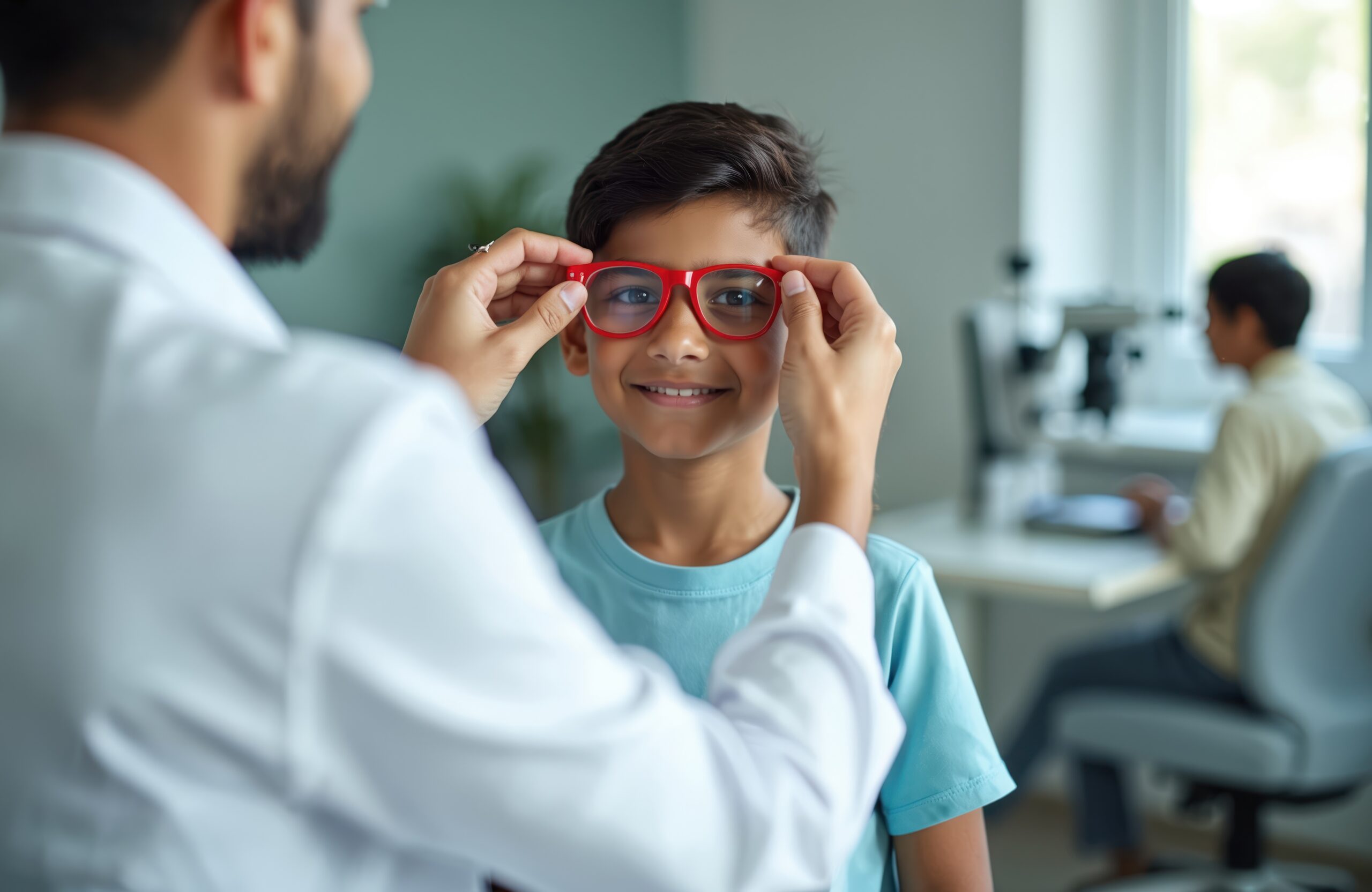
August is Children’s Eye Health & Safety Month, which makes it a reasonable time to cover what actually matters here — when eyes should be examined, why a school screening isn’t the same thing, and what’s worth watching for at home.
Read more →
August is Children’s Eye Health & Safety Month, which makes it a reasonable time to cover what actually matters here — when eyes should be examined, why a school screening isn’t the same thing, and what’s worth watching for at home.
Read more →
It’s 11 PM. Your eyes feel like sandpaper, your head aches, and sleep seems impossible. Those trendy blue light glasses promise relief—your coworker swears by them, and ads follow you everywhere. Before you spend $30 to $300, here’s what science actually says. Spoiler: Save your money.Blue light spans 400-500 nanometers (nm), with 415-455 nm being the highest energy visible light. Your screen emits less than 1% of what you get from the sun—about 100,000 times less blue light than stepping outside. During daytime, blue light is beneficial. It activates intrinsically photosensitive retinal ganglion cells (ipRGCs) in your retina, which suppress melatonin, boost alertness, and regulate your circadian rhythm. The problem: these ipRGCs can’t distinguish between your phone at 10 PM and actual dawn, potentially disrupting sleep signals. But here’s where marketing diverges from science.
Read more →
The pattern in all these holiday eye injuries is clear: most of them are entirely preventable. A moment of caution, the proper protective equipment, and awareness of risks can mean the difference between a joyful holiday season and one spent recovering from a serious injury. As you prepare for your holiday celebrations, keep eye safety in mind. An accident can happen in just seconds, but the consequences can last a lifetime.
Read more →
Video games are a common pastime for children and adults alike. They’re a fun way to de-stress and can even build helpful cognitive skills in young people before they enter the world. Unfortunately, gaming isn’t all positive. The gaming eye-health relationship has become clearer with recent research, and the signs point to frequent screen use causing vision problems. Here are the facts to consider as a parent or player before picking up the controller or mouse.
Read more →
As September approaches, helping your child get ready for a new school year becomes a priority. In between shopping for new clothes and supplies, one thing to consider is scheduling a vision test. Although it’s true that schools offer these assessments, they may not provide the in-depth information that can help your child. When it comes to kids and vision, getting regular checkups from experts in the field is the best bet. But why are these exams so important, and what warning signs can tell you that your child may be struggling with vision problems?
Read more →
Despite being a relatively common issue throughout the world, most people have never heard of binocular vision dysfunction. It is a kind of sight disorder that affects people of all ages, primarily making them unable to see the world around them as a single image. Even if you have 20/20 vision, you can find yourself struggling with headaches, dizziness, and eye strain, all of which are signs of binocular vision dysfunction. Read on for a closer look at what binocular vision dysfunction entails and what you can do about it.
Read more →
Having 20/20 vision is often seen as the gold standard of eye health. But what if your vision is perfect on paper and you still struggle with reading, writing, or navigating your surroundings? For some individuals, particularly children, this may indicate visual processing disorders.
Read more →
Research shows that many Americans believe vision health is just as important as heart health. Still, only about half of Americans get annual check-ups for their eyes. This statistic is especially concerning because it is believed that over 16 million people have undiagnosed vision problems. Getting regular eye exams helps promote the long-term health of both your eyes and your body. Proactive eye care leads to early detection of potential issues, which can save your vision and, in some cases, your life. Find out why you should prioritize eye health for yourself and your loved ones with annual check-ups for your vision.
Read more →
From 2011 to 2015, over a quarter of a million children were treated in an emergency department for toy-related injuries. About 1 in 10 childhood eye injuries seen in emergency rooms are caused by toys. When you’re purchasing a holiday gift for a child, think about how that toy might affect their eye health. Discover what potential hazards some toys pose and how you can choose safe holiday toys to prevent harm to your loved ones’ vision and eye health.
Read more →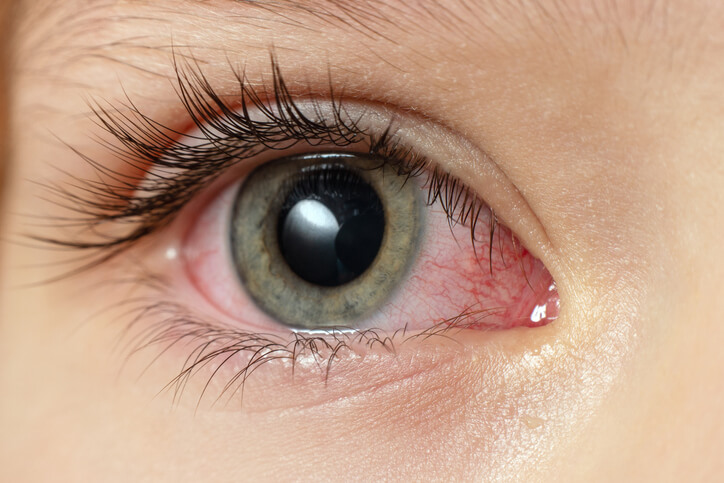
Pink eye is one of the most common and most treatable eye conditions. This highly contagious condition gets its name from the way it can turn the membrane that covers the white of your eyes a pink hue.
Despite being such a common condition, there are still many pink eye myths out there that can put people at further risk of catching it or delaying treatment. Here’s what you need to know about pink eye and the most common myths surrounding it.